The Complete Guide to Generative Engine Optimization (2026)
The definitive guide to GEO - what it is, why it matters, how it differs from SEO, and a step-by-step framework for making AI search engines recommend your product.
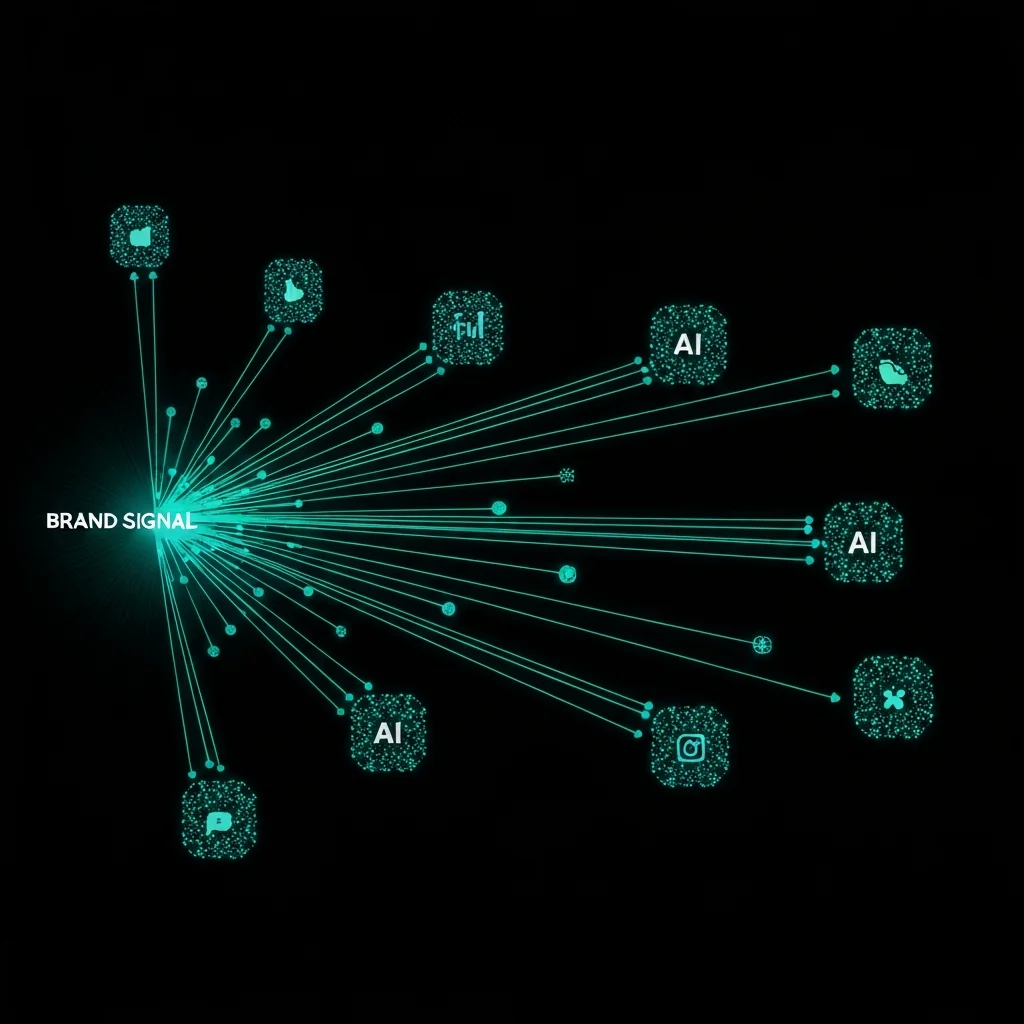
Generative Engine Optimization (GEO) is the practice of optimizing your brand’s presence in AI-generated search results - making engines like ChatGPT, Perplexity, Gemini, Claude, and Copilot cite, recommend, and accurately describe your product when buyers ask category-relevant questions.
If SEO is about ranking in 10 blue links, GEO is about being in the one AI-generated answer that increasingly drives the buying decision.
Why GEO Matters Now
Three converging trends make GEO essential for any company that acquires customers through search:
AI search adoption is accelerating. ChatGPT has 400 million weekly active users. Perplexity processes over 100 million queries monthly. Gemini is integrated into Google Search. These aren’t fringe tools - they are becoming the primary research interface for a growing percentage of buyers.
Zero-click searches are the majority. 58.5% of Google searches now end without a click to any website. The search engine provides the answer directly. AI engines take this further - they don’t just show summaries, they synthesize complete recommendations.
Less than 5% of companies practice GEO. The opportunity window is wide open. Companies that optimize for AI engines now will build entity authority and citation momentum that becomes exponentially harder for latecomers to overcome. First-mover advantage in GEO is real and durable.
GEO vs. SEO: What’s Actually Different
GEO and SEO share some foundations but diverge in critical ways:
What carries over from SEO:
- Domain authority still matters - authoritative domains get cited more
- Content quality is essential - AI engines don’t cite thin content
- Structured data helps - schema markup serves both channels
- Technical accessibility - if crawlers can’t reach your content, neither can AI engines
What’s new in GEO:
- Entity authority - AI engines don’t rank pages, they evaluate entities (brands, products, people). Your entity’s authority across the web determines citation frequency
- Citation optimization - not backlinks, but being mentioned as a credible source in content that AI engines use for training and retrieval
- llms.txt - the AI equivalent of robots.txt, telling AI crawlers how to understand your site
- Cross-engine optimization - ChatGPT, Perplexity, and Gemini each select sources differently
- Prompt research - understanding the natural-language queries buyers use in AI engines, not just keywords
What’s deprecated:
- Keyword density - AI engines understand semantics, not keyword frequency
- Exact-match anchor text - irrelevant to AI citation
- Link juice manipulation - AI engines evaluate source credibility, not link graphs
- Content length for length’s sake - AI engines prefer fact density over word count
The GEO Framework: 5 Pillars
Pillar 1: Entity Authority
Entity authority is the most important factor in GEO. It measures how strongly AI engines recognize your brand as a credible, authoritative entity in your category.
Entity authority is built through:
- Wikipedia/Wikidata presence - one of the most-cited knowledge sources across all AI engines
- Consistent NAP (Name, Address, Phone) across directories and platforms
- Industry publication mentions - being cited by authoritative sources in your vertical
- Social proof signals - GitHub stars, G2 reviews, Trustpilot ratings, awards
- Structured data - schema markup that explicitly defines your entity and its relationships
Pillar 2: Content Citability
Not all content is equally citable. AI engines prefer content that is:
- Fact-dense - specific claims, numbers, comparisons, and definitions
- Well-structured - clear headers, lists, tables, and definition patterns
- Authoritative - backed by evidence, data, or expert credentials
- Fresh - recently updated content gets preferential treatment
- Unique - original research, proprietary data, and novel insights
Pillar 3: Structured Data
Schema.org structured data (JSON-LD) tells AI engines exactly what your entity is, what it does, and how it relates to other entities. The schemas that matter most for GEO:
- Organization - your company entity
- Product or SoftwareApplication - your product entity
- FAQ - frequently asked questions with answers
- HowTo - step-by-step guides
- Article - blog posts and thought leadership
Pillar 4: Technical Accessibility
AI engines need to access and parse your content efficiently:
- llms.txt - a structured file that tells AI crawlers about your content hierarchy
- Sitemap optimization - prioritizing your most authoritative pages
- Crawl accessibility - ensuring AI crawlers can reach your content
- Content freshness signals - last-modified dates, update logs
Pillar 5: Cross-Engine Optimization
Each AI engine selects sources differently:
- ChatGPT - weights entity authority and content recency heavily
- Perplexity - prioritizes source diversity and real-time web results
- Gemini - integrated with Google Search signals, weights domain authority
- Claude - focuses on content quality and factual accuracy
- Copilot - leverages Bing index, weights structured data
A comprehensive GEO strategy optimizes for all five engines, not just one.
Getting Started with GEO
The fastest path to AI search visibility:
Audit your current visibility. Ask each AI engine 10 category-relevant queries and document whether your brand appears, how it’s described, and who your competitors are in the responses.
Implement structured data. Deploy Organization, Product, and FAQ schema markup on your key pages. This is the highest-impact, lowest-effort GEO action.
Deploy llms.txt. Create an llms.txt file that maps your site’s content hierarchy for AI crawlers.
Build entity authority. Start with Wikipedia/Wikidata, industry directories, and one guest publication placement per month.
Monitor and iterate. Track your AI Visibility Score monthly and adjust your strategy based on what’s working.
For teams that want expert guidance, generative.qa’s GEO Readiness Audit provides a structured baseline and action plan in 3 days.
Book a free GEO strategy call to discuss your AI search visibility.
Frequently Asked Questions
What is Generative Engine Optimization (GEO)?
Generative Engine Optimization (GEO) is the practice of optimizing your brand's presence in AI-generated search results so engines like ChatGPT, Perplexity, Gemini, Claude, and Copilot cite and recommend your product when buyers ask category-relevant questions. Think of it as the AI search equivalent of ranking on Google's first page.
How is GEO different from traditional SEO?
SEO optimizes pages for keyword rankings; GEO optimizes brand entities for AI citation frequency. Key differences: GEO prioritizes entity authority over domain authority, uses prompt research instead of keyword research, requires llms.txt (no SEO equivalent), and must optimize across 5+ AI engines rather than primarily Google.
How big is the opportunity for early GEO adopters?
The window is wide open: fewer than 5% of companies are actively optimizing for AI engines despite ChatGPT reaching 400 million weekly active users and Perplexity processing over 100 million queries monthly. Companies that build entity authority and citation momentum now create a compounding advantage that becomes harder for latecomers to overcome.
What is the fastest way to improve AI search visibility?
The fastest path starts with implementing structured data (Organization, Product, and FAQ schema) - it is the highest-impact, lowest-effort GEO action. Then deploy llms.txt to guide AI crawlers, run a 10-query visibility audit across the five main AI engines, and start building entity authority through industry directories and publication mentions.
Does having good SEO automatically mean good GEO performance?
No - the signals are related but distinct. Domain authority and content quality carry over from SEO, but entity authority, citation optimization, and prompt research are GEO-specific concerns with no direct SEO equivalent. A brand can have strong domain authority but weak entity authority and remain invisible in AI recommendations.
Complementary NomadX Services
Get Recommended by AI.
Book a free 30-minute GEO strategy call. We check what ChatGPT, Perplexity, and Gemini say about your product right now - and show you how to improve it.
Talk to an Expert